About/Blog/The Complete Guide to the Oil to Heat Pump Affordability Program (OHPA)

The Complete Guide to the Oil to Heat Pump Affordability Program (OHPA)

The Complete Guide to the Oil to Heat Pump Affordability Program (OHPA)
calendar

Jun 17, 2026

read time

6 Mins

If you are still heating your home with an oil furnace, you are well aware of the headaches it brings. Between volatile fuel delivery prices, the constant worry of an aging oil tank leaking, and the sheer cost of keeping your home warm through a Canadian winter, oil heat has become an expensive relic of the past.

Fortunately, the federal government has introduced an aggressive, direct initiative to help families transition away from fossil fuels without taking on massive debt. If your household matches regional median or below-income criteria, the Oil to Heat Pump Affordability Program is designed to eliminate the financial barriers of modernizing your home comfort system.

What is the Oil to Heat Pump Affordability Program?

The Oil to Heat Pump Affordability Program (commonly known as OHPA) is a targeted federal grant designed explicitly for lower-to-middle-income Canadian homeowners who currently heat their properties with oil. Unlike standard retroactive grants where you must pay thousands out of pocket and wait months for a reimbursement check, the OHPA program provides upfront funding or direct-to-contractor payments so you face little to no out-of-pocket costs.

The maximum amount of funding available depends heavily on where your property is located:

  • The Federal Base Grant: Offers up to $15,000 in upfront funding for eligible households in Ontario and Nova Scotia.

  • Nova Scotia Stream: Thanks to matched provincial funding extensions, eligible Nova Scotian homeowners can receive up to $15,000 in total upfront grants, completely covering the installation, plus a specialized $250 bonus payment.

  • Ontario Stream: Delivered in partnership with the Independent Electricity System Operator (IESO), eligible Ontario households can receive free direct installations of a cold-climate system valued up to $25,000 (combining up to $15,000 federal and $10,000 provincial allocations) from the Energy Affordable Program.

Crucially, the grant money doesn’t just cover the price of the heating equipment itself. It can also be applied toward the safe removal of your old oil tank, auxiliary electric backup heaters, and any required electrical panel upgrades needed to support the new system.

What is a Heat Pump?

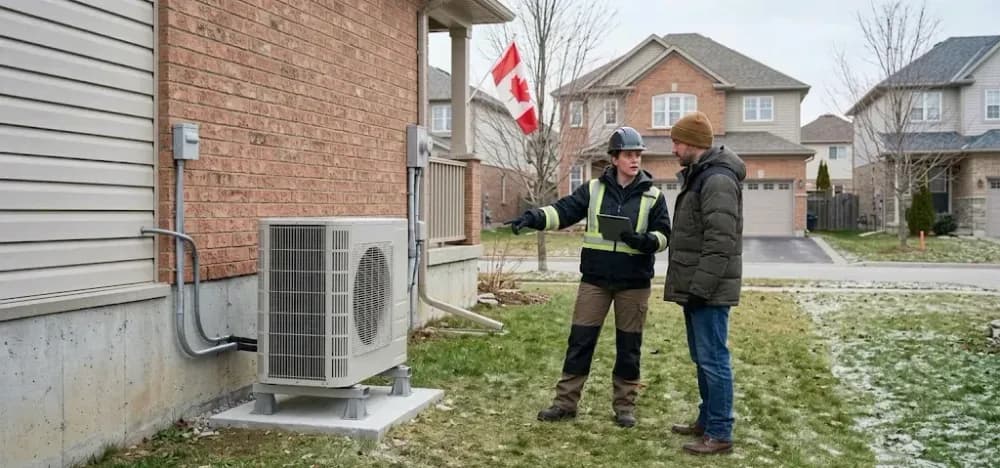
A heat pump is an advanced, two-way climate control system. Instead of burning a fuel source like oil or gas to create heat, it uses a specialized refrigerant cycle to move existing heat from one place to another.

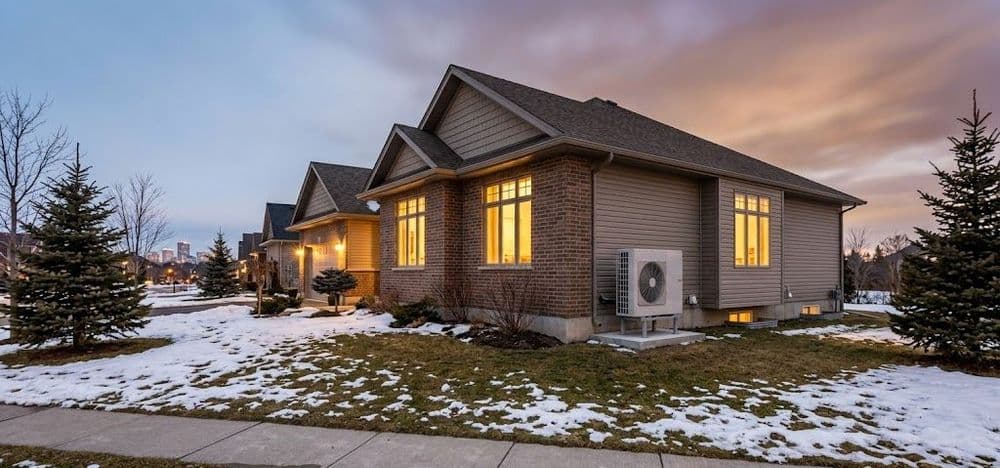
In the winter, a cold-climate heat pump extracts ambient thermal energy from the outdoor air (even in extreme sub-zero temperatures), intensifies it through a compressor, and distributes it indoors as reliable warmth.

In the summer, the system reverses direction. It acts exactly like a heavy-duty air conditioner, drawing warm air and indoor humidity out of your home and venting it outside to keep your indoor spaces perfectly crisp.

The Trend of Using Heat Pumps in Canada

Across the country, the transition to residential electrification has accelerated dramatically. Thousands of Canadian homeowners have already successfully utilized the program, resulting in tens of thousands of metric tons of greenhouse gas reductions.

The surge in popularity is driven by a collective shift toward grid-tied energy infrastructure. As provinces continue to modernize their electricity grids, moving away from volatile, foreign-dependent oil markets toward stable, locally regulated electricity is viewed as the definitive path forward for long-term economic security.

The Benefits of Using a Heat Pump

Switching from a traditional oil furnace to a premium electric system delivers instant improvements across multiple areas of your life:

  • Substantial Monthly Savings: On average, Canadian households that completely transition from oil to an energy-efficient heat pump save over $1,300 per year on their net utility bills.

  • Year-Round Comfort Integration: Oil systems can only provide heat. A heat pump acts as both your winter furnace and your summer cooling solution, eliminating the need to buy or maintain a separate air conditioner.

  • Enhanced Home Safety: Removing an oil tank eliminates the risk of environmental soil contamination or carbon monoxide leaks associated with burning fossil fuels inside your home.

  • High System Efficiency: Because heat pumps move thermal energy rather than burning fuel, they achieve up to 200% to 300% efficiency, making them the most environmentally responsible choice for modern home comfort solutions.

Other Heat Pump Rebate Programs in Nova Scotia and Ontario

If your household income sits above the median threshold required for the upfront OHPA grant, you can still access substantial alternative provincial funding pools:

  • In Ontario: Homeowners can leverage the Home Renovation Savings (HRS) Heat Pump Rebate, which offers up to $7,500 for non-gas homes and up to $2,000 for gas-heated properties looking to install a flexible hybrid setup.

  • In Nova Scotia: Homeowners can utilize the Efficiency Nova Scotia heat pump rebate pathways, including the Moderate Income Rebate (MIR) and the standard Home Energy Assessment (HEA) streams, which provide up to $5,000 to $9,000 back on centrally ducted installations.

Related Articles from Polaron Comfort

Ready to completely eliminate your oil bills and upgrade your home's climate system for free? Contact the local experts at Polaron Comfort today to check your program eligibility and secure your upfront funding assessment!

FAQ: Mostly Asked Questions About the OHPA Program

1. Do I need a home energy audit to apply for the Oil to Heat Pump Affordability Program?

Unlike legacy federal programs, a pre-retrofit home energy evaluation is typically not required for standalone OHPA applications, drastically speeding up your approval timeline.

2. What documents are required to prove my eligibility?

You will need to provide proof of homeownership, proof of household income (such as your latest Notice of Assessment), and official fuel delivery records showing you purchased at least 500 liters of heating oil within the past 12 months.

3. Can I install a hybrid system (heat pump paired with an oil furnace) under this program?

No. The core objective of the OHPA program is full electrification. Hybrid configurations that leave an oil furnace active as a backup are completely ineligible for this specific funding stream.
< PreviousNext >

Read More

How to Size a Heat Pump for an Ontario Home
CalendarNov 11, 2026
How to Size a Heat Pump for an Ontario Home

Size a heat pump for an Ontario home using BTUs, tons, square footage, climate, and backup heating.

Renting a Tankless Water Heater in Ontario
CalendarOct 27, 2026
Renting a Tankless Water Heater in Ontario

Upgrading to a high-efficiency tankless water heater is one of the most effective ways to lower your monthly utility bills and ensure your family never runs out of hot water. As energy costs fluctuate across Ontario, homeowners are increasingly switching from traditional storage tanks to on-demand systems. When making the transition, the biggest decision is whether to purchase the equipment outright or opt for a tankless water heater rental. By comparing upfront costs, maintenance responsibilities, and long-term value, you can make an informed choice that protects both your home comfort and your budget. Why Upgrade to a High-Efficiency Tankless Water Heater? Traditional hot water tanks continuously heat and hold 40 to 60 gallons of water, wasting energy through standby heat loss while you are at work or asleep. A high-efficiency tankless water heater solves this problem by heating water instantly only when a tap is turned on. Hot Water on Demand: Delivers a limitless supply of hot water, perfect for large families, back-to-back showers, or high-usage morning routines. Massive Energy Savings: Slashes monthly natural gas or electricity consumption by up to 40% by eliminating standby energy waste. Space-Saving Design: Compact, wall-mounted units reclaim valuable basement square footage previously occupied by a bulky storage tank. Longer Lifespan: With proper care, tankless units easily outlast standard storage tanks, operating reliably for up to 20 years. When deciding between renting or buying a tankless water heater in Ontario, owning offers lower total lifetime costs but requires a steep upfront capital investment. Conversely, renting eliminates upfront costs and offloads all maintenance, repair, and emergency service risks onto the provider in exchange for a predictable monthly fee. Rent vs. Buy Tankless Water Heater: Comparison | Feature / Criteria | Owning a Tankless Water Heater | Renting a Tankless Water Heater | | :---- | :---- | :---- | | Upfront Investment | High initial cost | \$0 upfront capital required | | Long-Term Cost | Cheaper over the full lifespan of the unit | Higher cumulative cost over a decade | | Maintenance & Servicing | No Maintenance & Warranty Included | No Maintenance & Warranty Included | | Financial Risk | / | Predictable monthly pricing with total peace of mind | | Ideal For | Homeowners with available capital seeking maximum long-term savings | Homeowners wanting fixed monthly costs and hassle-free protection | The Polaron Comfort Advantage: The Best Tankless Water Heater Rental in Ontario If you are looking for the most competitive tankless water heater rental cost in Ontario, Polaron Comfort has disrupted the 2026 market with an unbeatable program. We make upgrading to a high-efficiency system affordable, stress-free, and highly rewarding for local homeowners. Industry-Leading Pricing: Rent a premium tankless water heater for just \$34.99/month (plus tax)—significantly lower than the standard \$50 to \$65 monthly rates charged by major competitors. Don't Pay for 6 Months: Keep your money in your pocket with zero payments for the first half-year of your rental agreement. 100% Maintenance-Free: Our modern systems are designed for high performance with zero maintenance hassle for the homeowner. 15-Year Comprehensive Warranty: Every rental package includes a robust 15-year parts and labor warranty, completely shielding you from unexpected repair bills. By choosing Polaron Comfort, you secure a predictable, low monthly rate while offloading all repair and maintenance risks to a licensed professional. Contact our team today to request your free quote. Related Articles The 2026 Complete Guide to Home Comfort Systems in Modern Homes Heat Pump vs Furnace 2026: Finding the Right Heating Solution for Your Home Water Treatment Solution Guide 2026: Reverse Osmosis & Water Softener Frequently Asked Questions 1\. What is the difference between a tankless and a standard tank water heater? Standard storage tank water heaters continuously heat and store water in a large tank, leading to standby energy loss. Tankless water heaters flash-heat water only when a tap is turned on as it travels through your pipes, providing an endless supply of hot water on demand while reducing energy waste. 2\. How long do tankless water heaters last? While traditional tank water heaters typically last 10 to 15 years, high-efficiency tankless water heaters are engineered for greater longevity and can last for up to 20 years. 3\. When should I replace my current water heater? You should consider upgrading your unit if it is nearing the end of its lifespan, if you notice rusty or cloudy water, if the unit makes strange "knocking" noises, or if you are facing frequent and expensive repair bills. 4\. How long does a tankless water heater installation take? A typical water heater replacement takes between 3 and 8 hours. Because a tankless system requires specific wall-mounting and precise venting, it generally takes slightly longer to install than swapping out a standard tank model. 5\. Can I repair my water heater myself? We strongly advise against attempting DIY repairs on your water heater, especially on natural gas or propane-fueled units, as this can lead to severe injury, carbon monoxide exposure, or fire hazards. Always rely on a licensed HVAC technician for safe and reliable service.

2026 - 2027 Winter Forecast: Why El Niño Makes a Heat Pump the Smartest Investment for Canadian Homes
CalendarSep 22, 2026
2026 - 2027 Winter Forecast: Why El Niño Makes a Heat Pump the Smartest Investment for Canadian Homes

Canadian winter weather has always been famously harsh, but recent meteorological trends are rewriting the seasonal playbook. According to recent weather outlooks, winter is expected to wait on the sidelines as an active El Niño pattern extends fall-like temperatures deeper into the season. While a delayed winter might sound like a welcome relief from heavy snow shoveling, these shifting weather patterns present a unique challenge for home comfort. Instead of continuous sub-zero deep freezes, the 2026 \- 2027 Winter Forecast in Canada points toward volatile temperature swings, mild shoulder-season spikes, damp air, and sudden, short-lived Arctic cold snaps. Relying solely on a traditional gas furnace during a mild, fluctuating winter is inefficient and costly. Here is why upgrading to a cold-climate heat pump, or pairing it with your furnace in a hybrid system is the ultimate way to maintain year-round indoor comfort while keeping utility bills under control. What the 2026 \- 2027 Winter Outlook Means for Your Heating Bills During standard Canadian winters, natural gas furnaces do the heavy lifting by running continuously to combat deep freeze conditions. However, the 2026 El Niño winter pattern creates prolonged periods where outdoor temperatures hover between 0°C and 12°C. When outdoor temperatures remain mild: Gas Furnaces Overwork & Overheat: Traditional furnaces are designed to generate high-intensity heat. Running a furnace during mild 8°C winter days leads to short-cycling (turning on and off rapidly), which wears out mechanical components and wastes natural gas. Indoor Air Moisture Problems: Mild winter days mixed with rain or melting snow create heavy indoor humidity. Standard single-stage heating systems struggle to balance indoor air quality under these conditions. Because your furnace won't need to burn full capacity fossil fuels during a milder seasonal start, this is precisely when a modern heat pump delivers its highest return on investment. Why a Heat Pump is Perfect for an Unpredictable El Niño Winter A high-efficiency cold climate heat pump does not burn fuel to create heat; instead, it uses a high-tech refrigeration cycle to transfer thermal energy between the outdoors and your home. This makes it uniquely suited for fluctuating Canadian weather. 1\. Dynamic Temperature Balancing Unlike a furnace that only delivers high-temperature hot air, a heat pump continuously modulates its output. On chilly November and December mornings, it delivers gentle, consistent warmth to keep your home cozy. If an unseasonably warm 15°C El Niño afternoon hits, a heat pump seamlessly switches to mild cooling or dehumidification mode to keep your indoor air fresh and balanced. 2\. Maximum Energy Savings During Mild Spikes Heat pumps operate at up to 300% to 400% efficiency during mild weather conditions (above 0°C). By relying on your heat pump during shoulder-season weather and mild winter days, you significantly reduce your natural gas consumption and avoid rising carbon tax charges. 3\. The Power of a Hybrid Setup (Heat Pump \+ Furnace) When evaluating a heat pump vs furnace winter strategy, you don't have to choose just one. Pairing a cold-climate heat pump with your existing gas furnace creates a hybrid heating system. During mild El Niño days, the heat pump runs on low-cost electricity to maintain perfect room temperatures. If a sudden polar vortex pushes temperatures below \-15°C, your system automatically switches over to the gas furnace for heavy-duty backup heat. You get total peace of mind regardless of what the forecast brings. Is Your HVAC System Ready for Winter 2026 \- 2027? Unpredictable weather requires a resilient, adaptable home comfort system. Whether you need to inspect your existing furnace, schedule essential HVAC winter maintenance, or explore upgrading to a high-efficiency heat pump bundle before winter hits full force, Polaron Comfort is here to help. Don't wait for the first sudden arctic snap to discover your home's heating weaknesses\! Take 10 seconds to get a free home comfort evaluation and check your eligibility of the government rebate. Related Articles The 2026 Complete Guide to Home Comfort Systems in Modern Homes Heat Pump vs Furnace 2026: Finding the Right Heating Solution for Your Home The 2026 Guide to the Home Renovation Savings (HRS) Heat Pump Rebate The Complete Guide to the Oil to Heat Pump Affordability Program (OHPA) Frequently Asked Questions 1\. Will a heat pump work if the 2026 \- 2027 winter drops into extreme cold? Yes. Modern cold-climate air-source heat pumps are engineered to operate efficiently down to \-25°C. For extreme Arctic conditions beyond that threshold, a hybrid setup seamlessly engages your gas furnace as a reliable secondary backup. 2\. Is an El Niño winter cheaper for home heating? A milder seasonal forecast generally reduces overall fuel consumption, but running a high-capacity gas furnace during mild weather can still lead to energy waste and high utility bills. Using a variable-speed heat pump during mild periods maximizes your efficiency and delivers significantly greater seasonal savings. 3\. Do heat pumps qualify for energy efficiency rebates in Canada? Yes\! Qualifying cold-climate heat pump installations and hybrid home upgrades are eligible for major provincial grants and 0% interest financing programs, helping offset upfront equipment costs.

Ontario Air Quality Drops to Hazardous Levels: How to Protect Your Indoor Air
CalendarJul 16, 2026
Ontario Air Quality Drops to Hazardous Levels: How to Protect Your Indoor Air

Key Takeaways: As hazardous wildfire smoke blankets Ontario, staying indoors isn't enough to protect your respiratory health. Learn how to shield your family by optimizing your HVAC settings and upgrading to a medical-grade GeneralAire Whole-Home HEPA and UV system to scrub out 99.97% of toxic PM2.5 smoke particles. On Wednesday, July 15, 2026, Environment and Climate Change Canada issued urgent air quality warnings across southern Ontario, including Toronto, Ottawa, and Mississauga. Driven by a massive Ontario Wildfire outbreak in northwestern parts of the province, plumes of thick smoke have drifted over 1,000 kilometers south. By Wednesday morning, Toronto ranked as the most polluted major city in the world, with an AQI exceeding 180. Local officials have activated "orange alerts" as the AQHI Ontario wildfire (Air Quality Health Index) surged into the maximum "very high risk" zone. The smoke is expected to remain well into Thursday with forecasts of clearing gradually by Friday, July 17th, 2026. Staying indoors is the primary safety recommendation. However, outdoor pollution quickly penetrates buildings, meaning your indoor air quality wildfire smoke defenses must be properly managed to prevent health complications. The Health Risks of Wildfire Smoke and Bad Air Quality Wildfire smoke is a complex mix of toxic gases and fine particulate matter. The most critical health threat comes from particles smaller than 2.5 microns, which require specialized wildfire smoke PM2.5 filtration to capture. Because PM2.5 particles are microscopic, they easily bypass your respiratory tract's physical defenses, traveling deep into your lungs and entering your bloodstream. Wildfire Smoke Health Risks in Ontario Mild Symptoms: Eye, nose, and throat irritation, accompanied by headaches and a mild cough. Severe Symptoms: Wheezing, severe coughing, chest pain, and breathing difficulties. High-Risk Groups: Seniors over 65, pregnant individuals, infants, young children, and anyone with pre-existing heart or lung conditions (such as asthma or COPD). Long-Term Impact: Prolonged exposure can trigger cardiovascular events, chronic bronchitis, and severely reduced lung capacity. How to Protect Your Home from Wildfire Smoke Your HVAC system acts as your home's primary shield. Knowing how to configure your ventilation system during a smoke event is critical to keeping toxic air out. | HVAC Component | Recommended Action | Why It Matters | | --- | --- | --- | | Air Conditioning | Should I run my AC during wildfire smoke? Yes, keep it running. | Standard AC units cool and recirculate existing indoor air rather than pulling smoky air inside. | | HVAC Fan Settings | Switch to recirculate HVAC air wildfire settings (Set fan to "ON" rather than "AUTO"). | Constant recirculation forces indoor air through your filtration system continuously, scrubbing out incoming particles. | | HRV / ERV Systems | Turn off or adjust your HRV ERV wildfire settings to "recirculate only." | These units are built to exchange indoor air with fresh outdoor air, which will pull smoke directly into your home. | | Furnace Filter | Upgrade to a high-efficiency MERV 13 filter HVAC model. | Standard filters only catch large dust particles; MERV 13 filters are dense enough to trap fine ash and smoke. | Implementing a Whole-Home HEPA & UV Shield Standard HVAC filters are helpful, but they cannot trap 100% of ultra-fine PM2.5 particles. To fully protect your family, installing a dedicated HEPA filter wildfire smoke system is the recommended solution. A whole-home HEPA filter upgrade works alongside your current furnace and ductwork. Instead of purifying just a single room with a loud portable unit, it continuously cleans the air in every room of your house. The GeneralAire Filtration Solution For medical-grade protection, we recommend integrating the GeneralAire Whole-House HEPA Air Purifier and GeneralAire UV Light system into your home: 99.97% Efficiency: The GeneralAire HEPA filter captures microscopic particles down to 0.3 microns, removing smoke, ash, and common allergens. Odour & Gas Removal: Features a carbon-infused pre-filter that actively neutralizes chemical gases and heavy wildfire smoke smells. Pathogen Neutralization: The accompanying GeneralAire UV Light kills airborne viruses, bacteria, and mold spores as they pass through your HVAC ducts. Constant Mitigation: Keeps your home's air safe, fresh, and breathable during seasonal pollution spikes, heavy pollen seasons, and active wildfire events. Secure Your Indoor Air Quality Today As wildfire seasons become longer and more intense, waiting for the next high risk air quality warning is a hazard to your family's health. Taking proactive steps to fortify your home’s ventilation is the most reliable way to protect your long-term health. Explore your indoor air quality options and request a free quote today. Frequently Asked Questions 1\. Should I run my air conditioner or heat pump during an Ontario wildfire smoke advisory? Yes, absolutely. Running your central air conditioner or heat pump is highly recommended because it allows you to keep all windows and doors closed (preventing outdoor smoke from leaking in) while keeping your home cool. However, you must make sure your thermostat/HVAC system is set to "Recirculate" (or "ON" rather than "AUTO") so it continuously filters the existing indoor air instead of pulling in smoky air from outside. 2\. What filter rating is best for removing wildfire smoke and PM2.5 particles? Standard fiberglass filters cannot capture the microscopic PM2.5 particles found in wildfire smoke. You need a minimum of a MERV 13 pleated filter or HEPA filter to begin trapping smoke particles. For the ultimate level of protection, upgrading to a dedicated whole-home HEPA filtration system is the gold standard, as it is clinically proven to trap 99.97% of airborne particles down to 0.3 microns. 3\. Should I turn off my HRV or ERV (ventilation system) during a smoke event? Yes. Heat Recovery Ventilators (HRVs) and Energy Recovery Ventilators (ERVs) are designed to bring fresh, outdoor air into your home. During a heavy wildfire smoke advisory, they will pull that toxic, smoky air directly into your ductwork. You should temporarily turn off or deactivate your HRV/ERV until the outdoor air quality improves. Related Readings: The 2026 Complete Guide to Home Comfort Systems in Modern Homes Air Conditioner Guide 2026: Keeping Your Cooling Solution Reliable for Home Comfort Heat Pump Guide 2026: A More Practical Heating and Cooling Solution for Home Comfort

The Complete Guide to the Oil to Heat Pump Affordability Program | Polaron Comfort