The 2026 Guide to the Efficiency Nova Scotia Heat Pump Rebate

May 27, 2026

6 Mins
With winter chills and humid Atlantic summers defining the East Coast climate, keeping utility bills predictable is a major priority for homeowners. If you are still relying on an outdated oil furnace or baseboard heaters, you are likely overpaying to keep your home comfortable.
Fortunately, 2026 brings some of the most aggressive green funding in Canadian history. The Efficiency Nova Scotia heat pump rebate program has transitioned into a highly comprehensive framework designed to maximize your household savings. By upgrading to an eco-friendly heat pump, you can significantly slash your heating costs, add a premium cooling solution for the summer, and get thousands of dollars back in government funding.
Let’s look at how the 2026 rebate channels operate, how the technology works, and how to claim your share.
What is the Efficiency Nova Scotia Heat Pump Rebate?
The Efficiency Nova Scotia heat pump rebate program is a collection of provincial and federal financial incentives managed under one localized umbrella. The initiative is designed to transition Nova Scotian properties away from carbon-intensive heating (like oil or fossil fuels) and inefficient electric baseboards toward high-performance electrification.
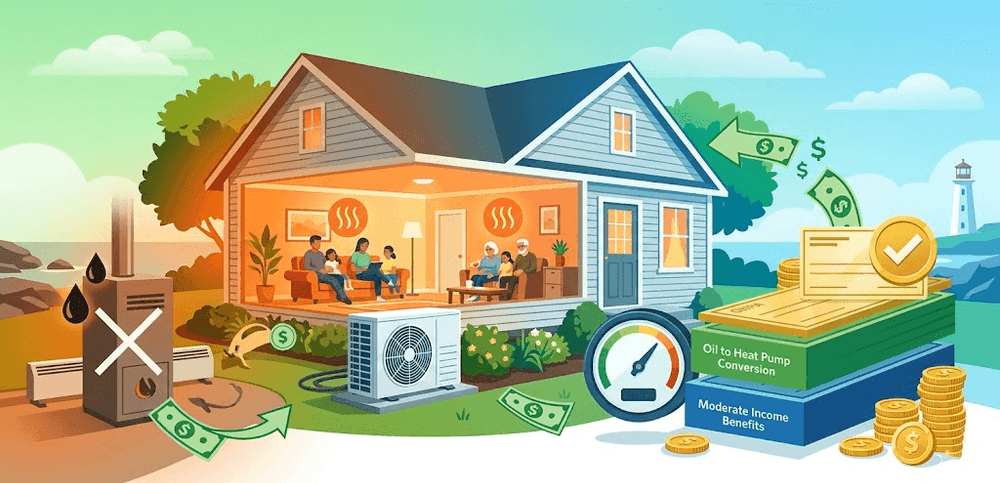
Depending on your current primary heating source and your household income, the program streams offer anywhere from thousands of dollars in standard upgrades to completely free home retrofits valued up to $30,000.
How Does a Heat Pump Work in an East Coast Home?
To understand why Nova Scotia is investing so heavily in this technology, it helps to look at the mechanics. Many homeowners believe that a heat pump creates heat using a flame or electrical element, similar to a traditional furnace. In reality, it doesn’t create heat at all, it simply moves heat from one place to another.
-
In the Winter (Heating Mode): Even during crisp, damp Atlantic winter days down to -25°C, there is still ambient thermal energy present in the outdoor air. This heat is transferred directly to your indoor coils, and your home’s blower circulates clean, cozy warmth through your rooms.
-
In the Summer (Cooling & Dehumidification Mode): The system automatically reverses the process. It acts as a heavy-duty air conditioner, drawing warm air and heavy humidity out of your living spaces, absorbing the heat and pumping it outdoors.
Because transferring heat requires far less electricity than creating it by burning oil or running high-draw baseboards, modern cold-climate heat pumps achieve 200% to 300% system efficiency. For every one unit of electricity the system consumes, it delivers up to three units of climate control back into your home, resulting in massive utility savings.
The 2026 Rebate Landscape: Program Streams
The program is engineered to provide the largest financial rewards to the households that stand to reduce emissions and energy costs the most:
-
The Oil to Heat Pump Affordability (OHPA) Program: If your home is currently heated primarily by oil, you can access substantial funding. Through the OHPA stream, qualified low-to-median-income households can receive up to $15,000 to cover the absolute total cost of buying and installing a cold-climate air-source heat pump, including oil tank removal and required electrical panel upgrades.
-
The Moderate Income Rebate (MIR): For households that fall within specific moderate-income thresholds but do not heat with oil, the MIR program offers thousands back for centrally ducted systems or multiple mini-split configurations. For oil-heated homes that meet the income limits, the MIR and OHPA programs can be stacked together for a massive total of up to $30,000, making the upgrade virtually free.
-
The Home Energy Assessment (HEA) Stream: If you do not meet the income-qualified criteria, you can still save significantly through the standard HEA stream. By booking a home energy assessment with a Registered Energy Advisor ($199 fee), general market homeowners can unlock up to $5,000 back on centrally ducted heat pumps or multiple mini-split systems.
How to Secure Your Efficiency Nova Scotia Heat Pump Rebate
To make sure your application goes through smoothly and is easily indexed by program auditors, follow these critical steps:
-
Verify Your Primary Heating Source: Gather your past 12 months of utility or fuel delivery bills (especially if verifying over 500 liters of oil consumption for the OHPA stream).
-
Apply Before You Buy: For the income-qualified streams, you must submit your application on the Efficiency Nova Scotia portal and receive a case number before any equipment is purchased or installed.
-
Choose an Approved HVAC Contractor: All installations must be executed by a certified professional. Partnering with a trusted provider like Polaron Comfort ensures your equipment is selected from the officially approved NRCan product list, protecting your rebate eligibility.
-
Complete the Post-Retrofit Evaluation: If your stream requires an energy audit, your advisor will return to verify the installation, accelerating your direct-deposit rebate check.
Related Articles from Polaron Comfort
-
The 2026 Complete Guide to Home Comfort Systems in Modern Homes
-
Heat Pump Guide 2026: A More Practical Heating and Cooling Solution for Home Comfort
-
Heat Pump vs Furnace 2026: Finding the Right Heating Solution for Your Home
Ready to maximize your East Coast savings and experience ultimate indoor comfort? Contact the experts at Polaron Comfort today to find the perfect, rebate-eligible heat pump system for your Nova Scotia home!
FAQ: Most Asked Questions About Nova Scotia Heat Pump Rebates
1: Do I absolutely need an energy audit to get a heat pump rebate in NS? If you are applying through the standard Home Energy Assessment (HEA) or Moderate Income streams, a professional energy audit is required to map out your home's baseline efficiency. However, certain standalone elements of the OHPA program allow paths to bypass this requirement if you are directly executing a complete oil-to-heat-pump conversion.
2: What are the household income limits for the Moderate Income Rebate? Income eligibility is calculated based on the number of people in your home. For example, a 2-person household can have a net income up to $77,050, while a 4-person household limit scales up to $120,750 to qualify for the enhanced funding brackets.
3: Can I finance the remaining balance of my HVAC system? Yes. Nova Scotia Power customers can often access specialized financing options, or you can take advantage of flexible 0% interest financing options directly through your installation provider.



.70e3bcd1.svg)
.8cbc05bd.svg)
.29c01fed.svg)
.6c51ffe3.svg)