Heat Pump VS Air Conditioner: Which Cooling Solution is Right for Your Home?

Jun 17, 2026

6 Mins
As summer temperatures climb across Canada, ensuring your home remains a cool, comfortable sanctuary is a top priority. However, if your old cooling system is on its last legs, you face an important decision that will affect your utility bills for the next fifteen years.
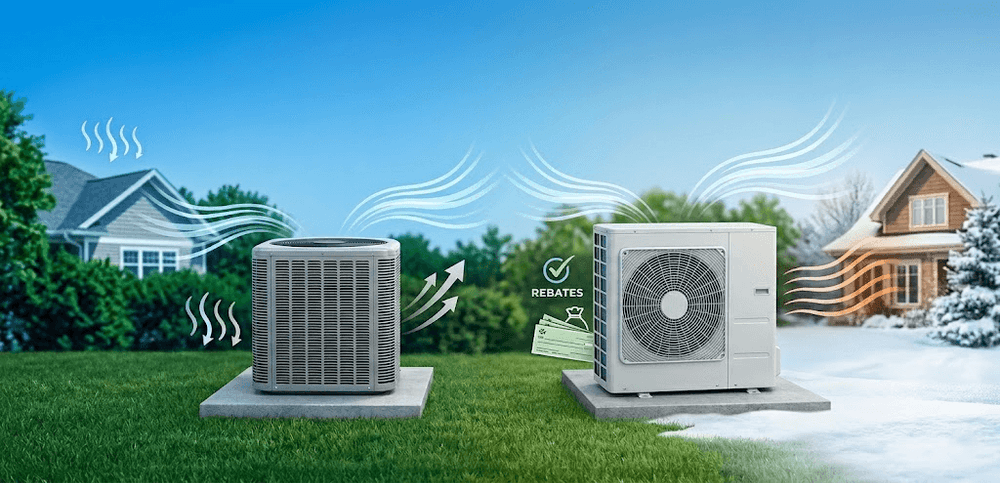
The traditional choice has always been a standard central air conditioner. But in 2026, modern cold-climate heat pumps have completely disrupted the market. When evaluating a Heat Pump VS Air Conditioner, it’s no longer just a question of which unit blows colder air, it’s about overall system efficiency, long-term operational costs, and taking advantage of thousands of dollars in government incentives.
Let's break down the mechanics, pros, and cons of each system to help you make an informed choice for your household.
What is a Heat Pump?
A heat pump is an all-in-one climate control system designed to provide both heating and cooling. Despite its name, a heat pump doesn't actually generate heat; instead, it uses a specialized refrigeration loop to transfer thermal energy between the inside of your house and the great outdoors.
During the summer months, it functions exactly like an advanced air conditioner, extracting heat and humidity from your rooms and pumping it outside. In the winter, the process completely reverses. Even in extreme sub-zero temperatures, the unit captures microscopic ambient heat from the outside air, compresses it to amplify its temperature, and moves it indoors to keep you warm.
What is an Air Conditioner?
A traditional central air conditioner is a dedicated, single-purpose cooling unit. Its sole job is to remove heat from inside your home and exhaust it outdoors.
An air conditioner cannot work in reverse. Because it only handles cooling, it must be permanently paired with a separate heating system—such as a natural gas, oil, or propane furnace, to keep your home habitable during the cold Canadian winter months.
Heat Pump VS Air Conditioner: The Core Differences
When pinning a Heat Pump VS Air Conditioner against each other, they look nearly identical from the outside. Both use an outdoor compressor, an indoor coil, and your existing ductwork to move air. However, their long-term value profiles differ significantly across three key metrics:
1. Year-Round Versatility
-
Air Conditioner: Only operates for a few months out of the year. Once autumn arrives, it sits idle until the following summer.
-
Heat Pump: Works 365 days a year. It provides crisp, dehumidified cooling all summer and seamless, energy-efficient warmth throughout the fall and winter.
2. Upfront Costs and Government Rebates
Historically, heat pumps carried a higher upfront equipment cost than standard air conditioners. However, in 2026, government mandates heavily favor clean electrification. Thanks to robust provincial programs, like Ontario's Home Renovation Savings initiative and the Efficiency Nova Scotia’s Heat pump rebates, homeowners can unlock massive subsidies for heat pumps. In many cases, these rebates make installing a premium, ultra-efficient heat pump cheaper out-of-pocket than buying a standard, non-rebated air conditioner.
3. Energy Efficiency and Utility Bills
While a high-efficiency AC will lower your summer electricity bills compared to an older unit, a heat pump optimizes your entire annual energy footprint. By implementing a hybrid heating and cooling solution, a heat pump can take over your home's heating demands during mild spring and autumn days. This prevents your furnace from burning expensive fossil fuels, significantly lowering your overall net utility costs across the entire calendar year.
How to Choose a Reliable HVAC Contractor
An advanced climate system is only as good as the team that installs it. Because modern systems rely on precise refrigerant charges, airflow balancing, and digital thermostat integrations, choosing the right professional is critical. When vetting local companies, ensure they meet these standards:
-
Full Licensing and Certifications: Technicians must hold valid trade licenses, provincial certificates, and TSSA credentials (in Ontario) to handle electrical and refrigerant lines safely.
-
Rebate Administration Expertise: The best contractors don't leave you to handle complicated government paperwork alone. Look for a team that guides you through the technical qualified-product databases and manages mandatory pre-approvals.
-
Transparent Pricing: Ensure they offer upfront quotes with no hidden fees, backed by comprehensive parts and labour warranties, alongside stress-free 0% interest financing options.
Polaron Comfort Service Area
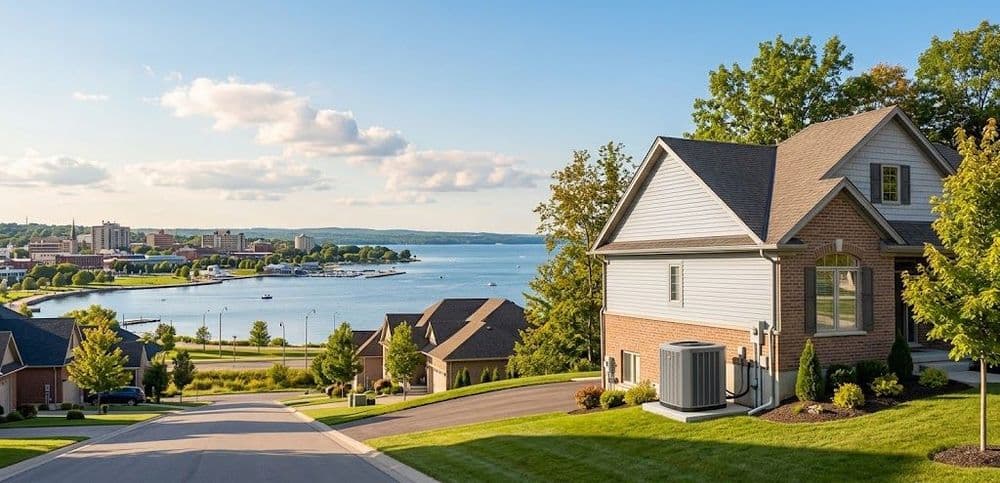
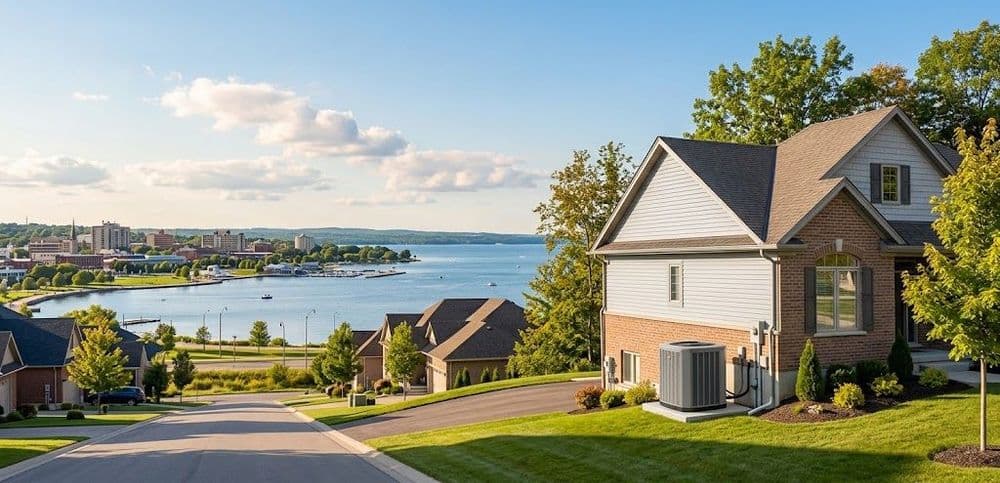
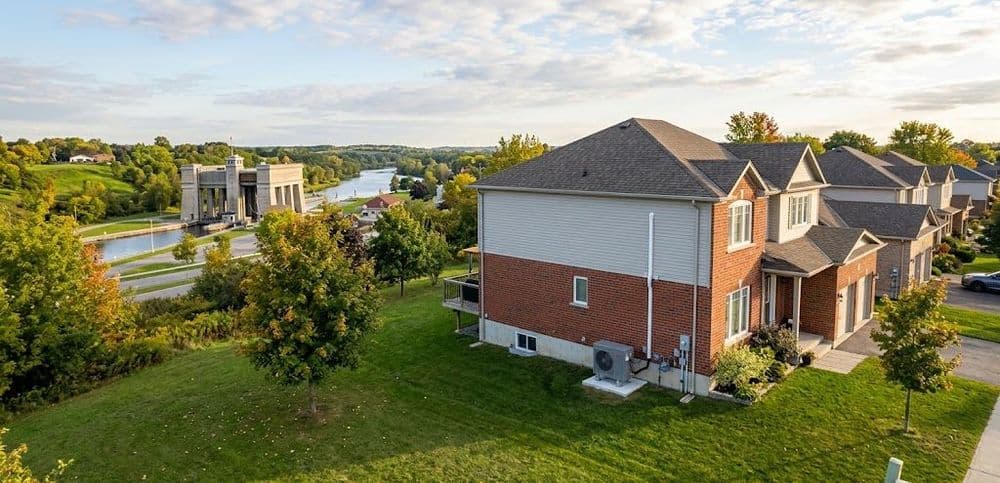
At Polaron Comfort, we are dedicated to delivering elite climate solutions right to your neighborhood. Our fully licensed, highly trained mobile service teams operate across a wide regional footprint, providing prompt installation of all home comfort products.
Our active service boundaries include:
-
Ontario Footprint: Full coverage across the Greater Toronto Area (GTA), Southwestern Ontario (London, Kitchener, Waterloo, Cambridge), Eastern Ontario (Kingston), and Central/Northern hubs up to Parry Sound.
-
Nova Scotia Footprint: Serving mainland Nova Scotia, including the Halifax Regional Municipality (HRM), extending through Truro and New Glasgow, and stretching down across the South Shore to Lunenburg.
Related Articles from Polaron Comfort
-
Heat Pump vs Furnace 2026: Finding the Right Heating Solution for Your Home
-
The 2026 Guide to the Ontario Home Renovation Savings (HRS) Heat Pump Rebate
-
The 2026 Guide to the Efficiency Nova Scotia Heat Pump Rebate
-
Air Conditioner Guide 2026: Keeping Your Cooling Solution Reliable for Home Comfort
Ready to find the perfect climate control system for your home? Contact the local experts at Polaron Comfort today to schedule your free, no-obligation home comfort assessment!
FAQ: Mostly Asked Questions About Heat Pumps and ACs
1. Does a heat pump cool a house as effectively as a traditional air conditioner?
Yes, absolutely. In cooling mode, a heat pump uses the exact same mechanical process as a standard AC. It moves the same volume of heat and provides identical, crisp, and dehumidified indoor comfort.
2. Can I keep my existing furnace if I install a heat pump?
Yes. This is known as a dual-fuel or hybrid system. The heat pump handles all your cooling needs in the summer and provides efficient heating during mild winter days. When extreme deep-freezes arrive, your system automatically switches over to your gas furnace to ensure uninterrupted warmth.
3. Do heat pumps require more maintenance than an air conditioner?
Because a heat pump works year-round to handle both heating and cooling, it experiences more operational hours than an AC. To protect your warranty and keep your system efficiency at its absolute peak, we recommend scheduling professional maintenance twice a year—once in the spring before cooling season, and once in the autumn before heating season.



.70e3bcd1.svg)
.8cbc05bd.svg)
.29c01fed.svg)
.6c51ffe3.svg)