London Home Comfort: The Ultimate Guide to Modernizing Your Southwestern Ontario Home


Jun 17, 2026

7 Mins
Living in the Forest City means embracing the beautiful seasonal shifts of Southwestern Ontario. However, it also means prepping your property for some of the most volatile weather patterns in the province. From bitter, damp winter winds blowing off the Great Lakes to the thick, oppressive humidity of July and August, our homes are constantly put to the test.
Achieving true London Home Comfort requires looking at your house as a complete, interconnected system. Your home heating, cooling, water heating, indoor air quality, and water purity must all operate in perfect harmony to keep your family healthy and your utility costs under control.
With energy rates continuing to shift in 2026, let’s dive into how you can optimize your London property for maximum efficiency and year-round comfort.
The Core Pillars of London Home Heating and Cooling
1. Heat Pumps: The Multi-Season Solution for London Weather
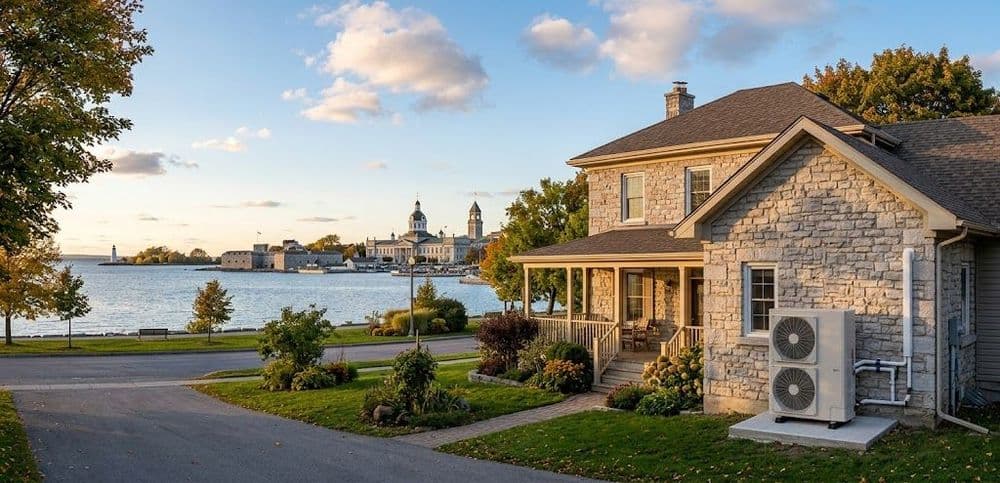
For homeowners searching for the absolute perfect technology to match London’s climate, a cold-climate air-source heat pump is the premier choice. Instead of generating heat by burning fossil fuels, a heat pump uses an advanced refrigeration cycle to move heat into your home during the winter and exhaust it outside during the summer.
Modern cold-climate heat pumps are engineered to run seamlessly even when temperatures drop well past -25°C. Because a heat pump acts as both a high-efficiency heating system and a premium air conditioner, you get year-round climate control out of a single outdoor unit. Transitioning to this setup also makes you eligible for substantial provincial funding through active energy-efficient home upgrade initiatives.
2. High-Efficiency Furnaces: Reliability When the Cold Snaps
While modern heat pumps are rapidly growing in popularity, traditional natural gas furnaces remain a reliable baseline for heating across London neighborhoods like Masonville, Byron, and Wortley Village.
In 2026, the ideal configuration for many Southwestern Ontario households is a hybrid (dual-fuel) heating system. By pairing a high-efficiency gas furnace with an electric heat pump, your HVAC system dynamically switches between electricity and gas based on whichever fuel source is most cost-effective at that exact outdoor temperature. The heat pump handles mild winter and shoulder-season days beautifully, while the gas furnace stands ready as a heavy-duty backup for extreme mid-winter deep-freezes.
3. Air Conditioners: Tackling the Mid-Summer Humidity
While a dedicated air conditioner isn’t mandatory if you have a whole-home heat pump installed, many London residents still prefer to run a standalone central air conditioner alongside their standard furnace.
When summer humidity peaks, a high-performance cooling system is vital to keep your living spaces livable. Upgrading a noisy, decade-old AC unit to a modern variable-speed model will instantly cut your electricity consumption. Instead of blasting on and off at 100% capacity, which spikes your monthly utility bills, variable-speed systems run at lower, continuous levels to steadily extract heavy humidity from the air, maintaining crisp, balanced temperatures throughout your home.
Optimizing Your Water and Air Ecosystem
4. Tank vs. Tankless Water Heaters
An overlooked component of residential comfort is how you manage your hot water supply. When upgrading an aging system, London homeowners usually choose between two options:
-
Traditional Storage Tanks: These units continuously heat 40 to 60 gallons of water. While they feature a lower upfront cost, they suffer from standby energy loss and can leave the last person in line with a cold shower.
-
Tankless Water Heaters: These sleek, wall-mounted systems flash-heat water on demand. Upgrading to a tankless water heater London Ontario setup ensures an endless supply of hot water, reclaims substantial basement floor space, and reduces your monthly gas bill by only heating water when a tap is turned on.
5. Indoor Air Quality: The Power of Advanced Air Filters
Because modern homes are sealed tightly to conserve energy, indoor pollutants like dust, pet dander, mold spores, and seasonal agricultural allergens from the surrounding Southwestern Ontario countryside can become trapped inside. To protect your family's respiratory health, moving beyond standard fiberglass filters is essential. Upgrading to a high-efficiency HEPA air filter or integrating a whole-home Energy Recovery Ventilator (ERV) ensures that the air passing through your ducts is constantly refreshed, clean, and healthy.
6. Water Treatment: Softeners and Reverse Osmosis (RO) Systems
London and its surrounding municipalities rely heavily on regional water sources that carry high concentrations of dissolved minerals like calcium and magnesium. This "hard water" causes a variety of issues, from chalky scale buildup that ruins your plumbing and water heater to dry skin and stiff laundry.
Installing high-performance water softeners in London, ON systems neutralizes these minerals, protecting your appliances and plumbing infrastructure. For immaculate, bottle-quality drinking water right from your kitchen tap, pairing your softener with a multi-stage Reverse Osmosis (RO) system effectively strips out heavy metals, chlorine, and microscopic contaminants naturally.
💰 The Polaron Comfort Advantage: Save Up to 30% with Custom Bundles
Managing multiple contractors for your furnace, AC, water treatment, and insulation can be a massive logistical headache. To make elevating your property's efficiency as seamless as possible, Polaron Comfort offers an exclusive bundle program that lets you save up to 30% off your total investment. By combining your HVAC system London Ontario upgrades with advanced water heating and filtration solutions under a single installation plan, you can maximize your immediate monthly utility savings while dramatically improving your home's long-term sustainability.Managing multiple contractors for your furnace, AC, water treatment, and insulation can be a massive logistical headache. To make elevating your property's efficiency as seamless as possible, Polaron Comfort offers an exclusive bundle program that lets you save up to 30% off your total investment. By combining your HVAC system London Ontario upgrades with advanced water heating and filtration solutions under a single installation plan, you can maximize your immediate monthly utility savings while dramatically improving your home's long-term sustainability.
Related Articles from Polaron Comfort
-
The 2026 Complete Guide to Home Comfort Systems in Modern Homes
-
Heat Pump vs Furnace 2026: Finding the Right Heating Solution for Your Home
-
Rent VS Own a Water Heater: The Ultimate 2026 Guide for Canadian Homeowners
-
Water Treatment Solution Guide 2026: Reverse Osmosis & Water Softener
Summary
Achieving optimal London Home Comfort requires looking at the big picture. Balancing an eco-friendly heating and cooling system with advanced water treatment and air purification doesn't just lower your carbon footprint, it guards your budget against rising energy costs and preserves your home's equity. Ready to transform your living space? Contact the experienced team at Polaron Comfort today to build your custom, rebate-eligible home comfort package!
FAQ: London Home Comfort Questions
1: Why is my London, Ontario water bill so high, and how can water treatment help?
While water rates vary, high utility bills can sometimes be aggravated by scale buildup inside your water heater caused by municipal hard water. When calcium coats the heating elements, your water heater has to run significantly longer to heat the exact same amount of water. Installing a water softener keeps the elements clean, preserving your system's efficiency.
2: Can a heat pump really handle a typical London winter without a backup? Modern, central cold-climate heat pumps are custom-engineered to provide reliable heating down to temperatures as low as -25°C or -30°C. However, for total peace of mind during rare, historic winter freezes, many London homeowners choose to pair their heat pump with their existing gas furnace in a hybrid configuration.
3: How often should I replace my home's air filter?
For standard 1-inch pleated filters, we recommend inspecting and replacing them every 60 to 90 days. If you upgrade to a heavy-duty, 4-inch media filter or a HEPA system as part of your indoor air quality London strategy, these advanced filters typically only need to be replaced every 6 to 12 months, depending on your household pets and allergy situation.







.70e3bcd1.svg)
.8cbc05bd.svg)
.29c01fed.svg)
.6c51ffe3.svg)